Last updated October 30, 2026
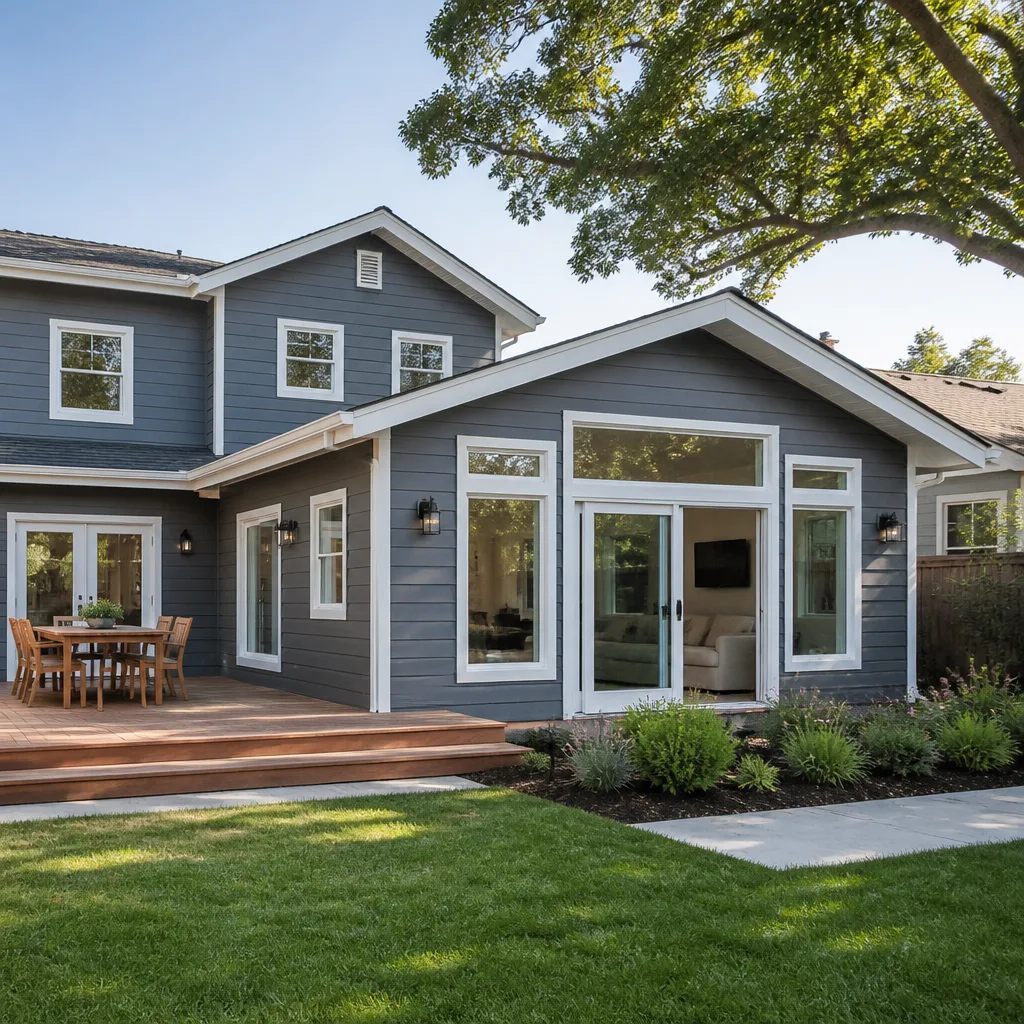 Home additions & ADU
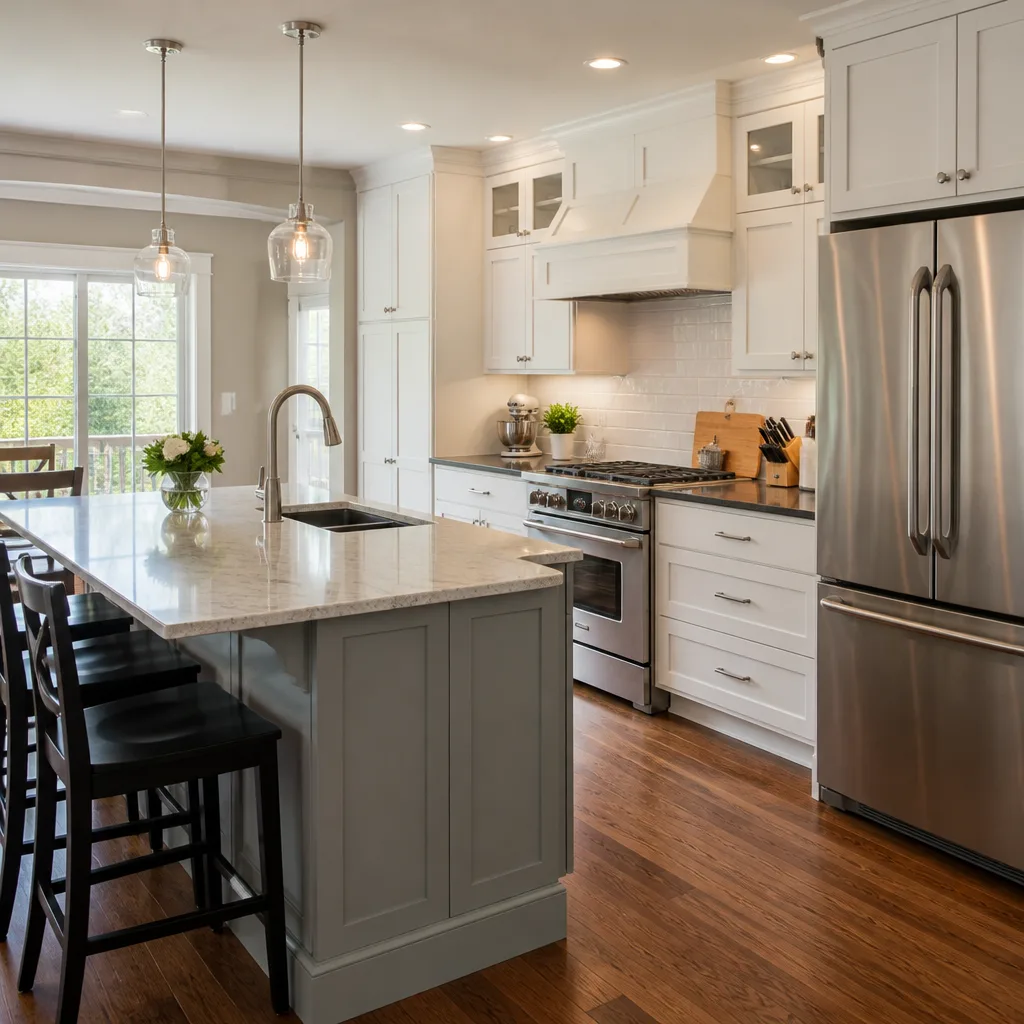 Kitchen remodeling
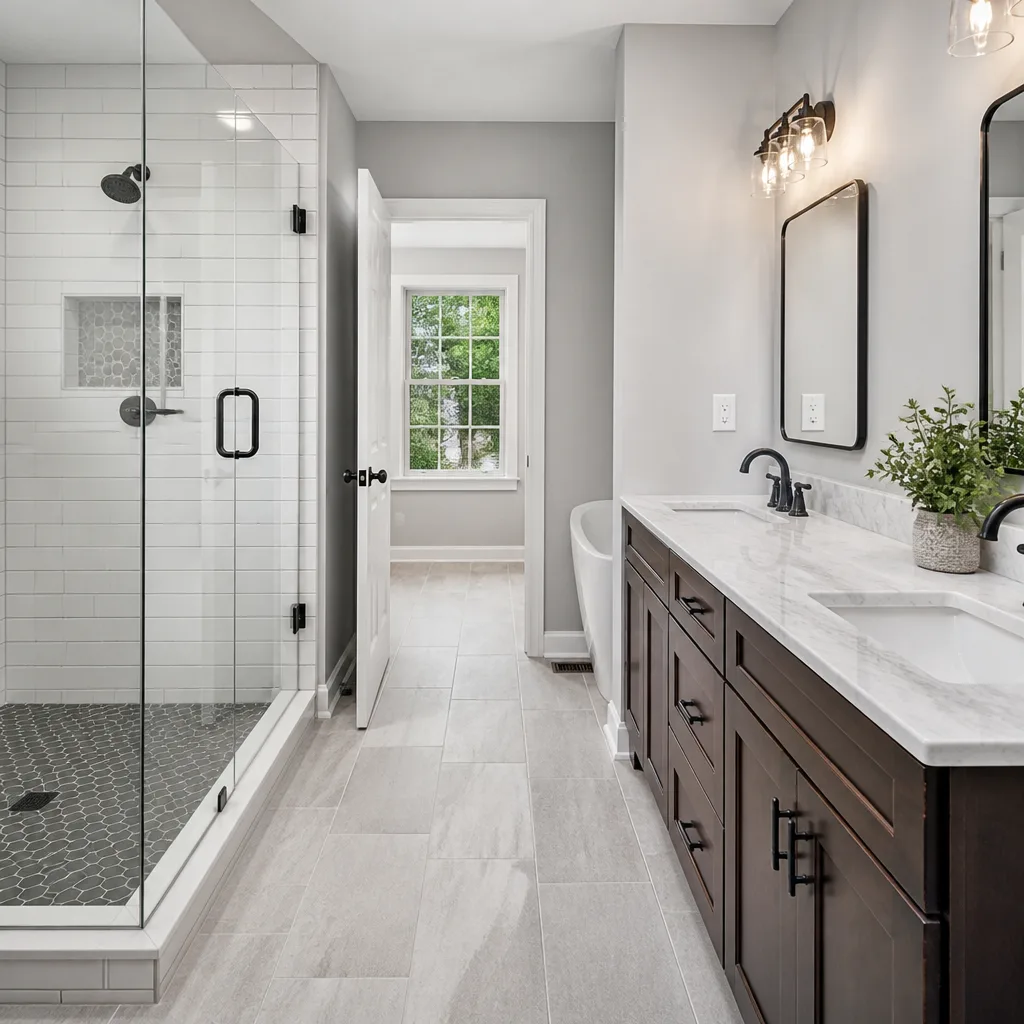 Bathroom remodeling
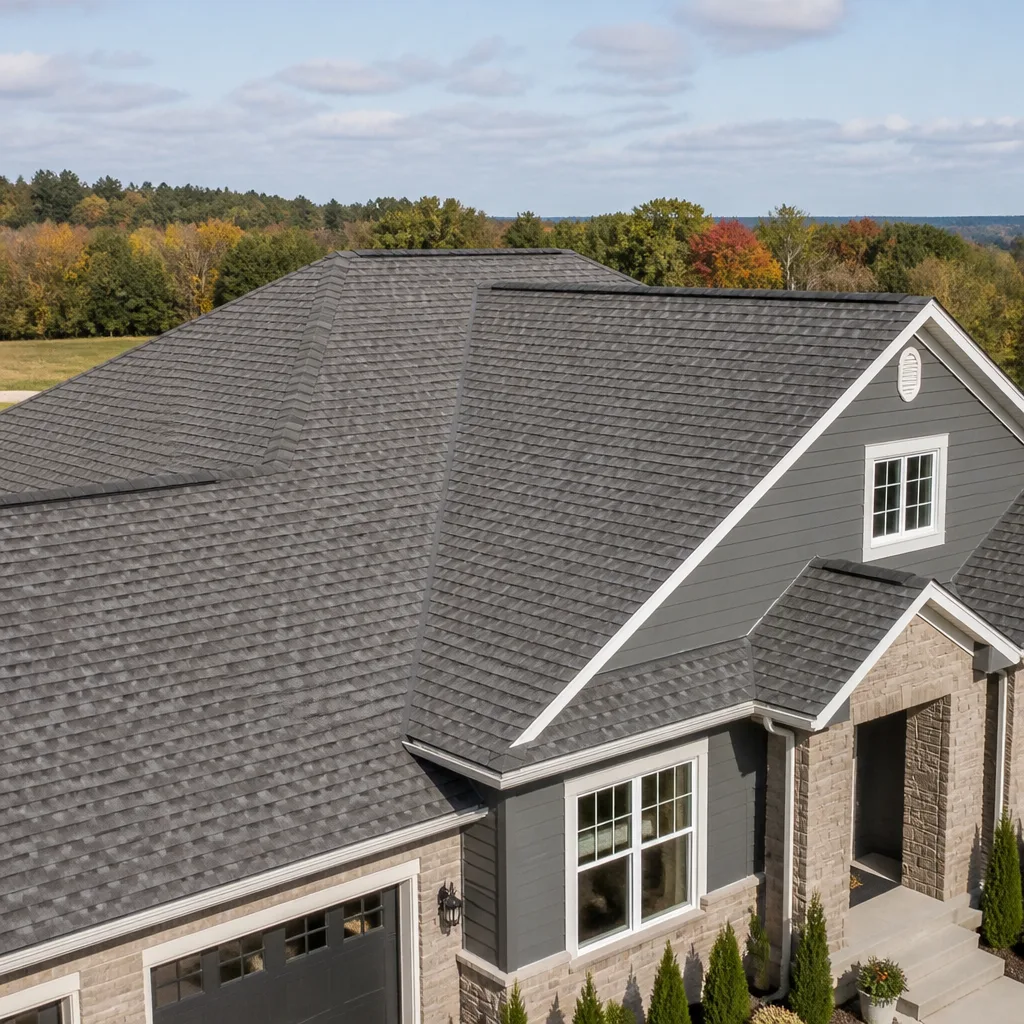 Roofing
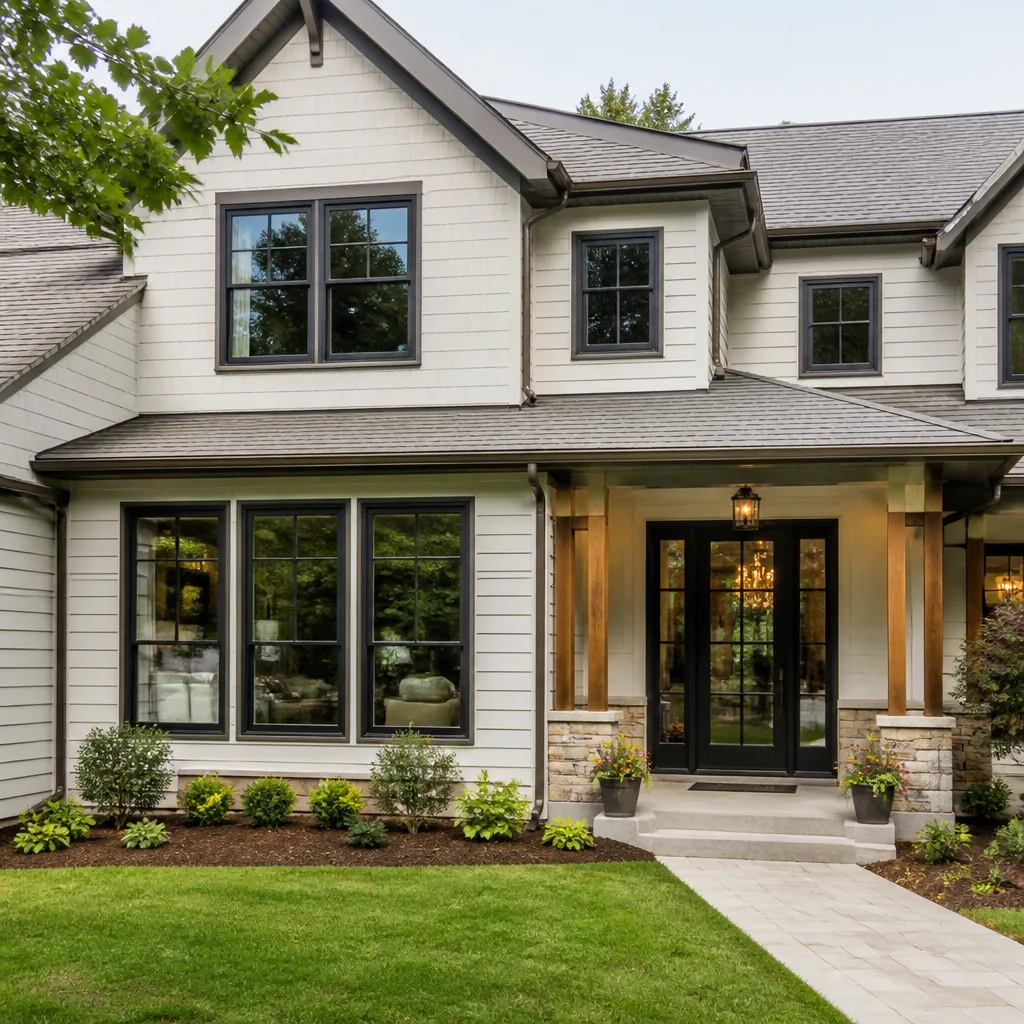 Windows & doors
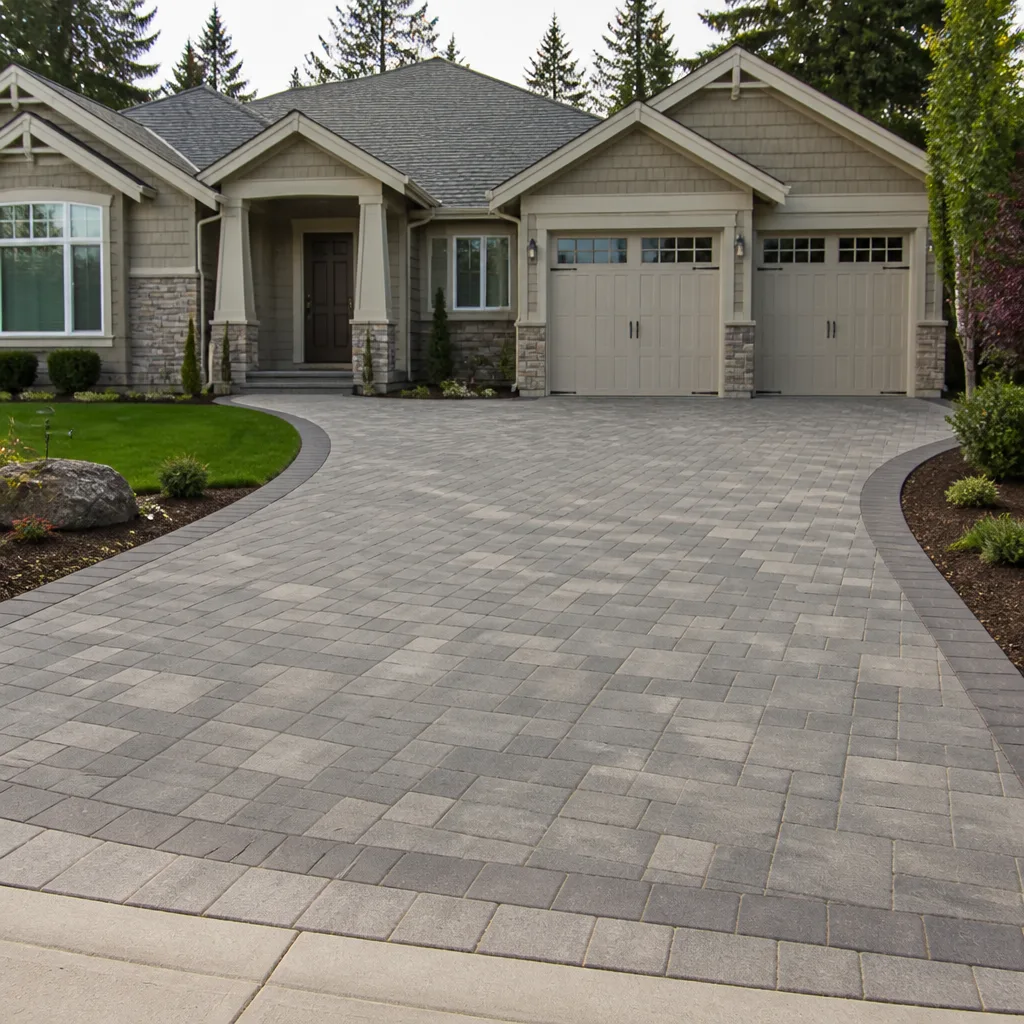 Driveway & pavers
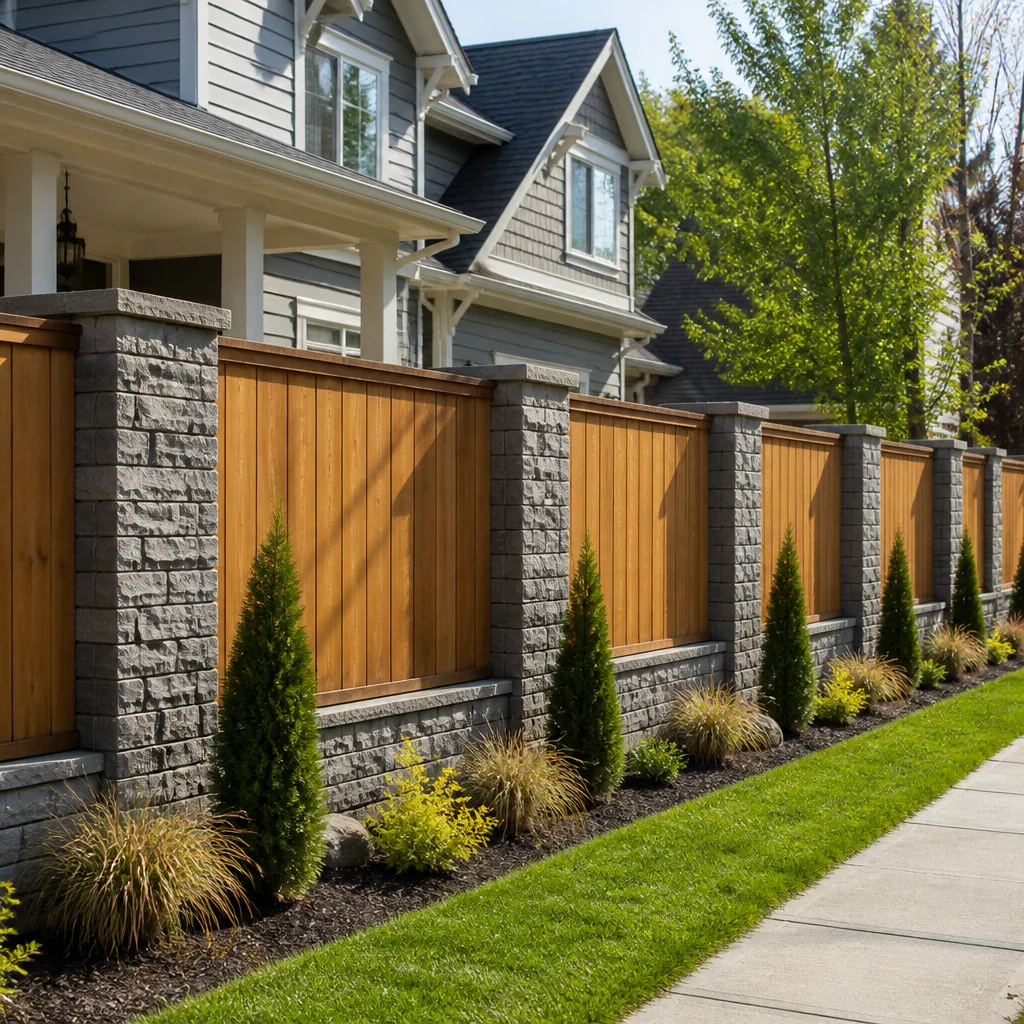 Fence
Free written scope consultation - allowances, timeline, and change-order rules on paper before a single trade is scheduled
Construction Cost Breakdown: The Moreno Valley Homeowner’s Reference for 2026
The cost-per-square-foot figure dominating online construction guides is an accounting output, not a planning input. It gets calculated after the project is done, by dividing total spend by finished square footage. That number tells you what your neighbor paid. It does not tell you what your project will cost. What determines your budget in Moreno Valley is the sum of individual trade scopes: concrete, framing, roofing, rough MEP, drywall, cabinetry, countertops, and finish work, each priced against Inland Empire labor rates and the specific material grades you choose. This reference breaks down those line items using the same structure a general contractor actually prices against, so you can plan from real numbers instead of national averages that miss everything local about building in Moreno Valley.
Quick Answer
Construction costs in Moreno Valley in 2026 typically run $180 to $420 per square foot depending on project type, finish level, and existing conditions, with full kitchen remodels ranging $45,000 to $110,000, primary bathroom remodels $28,000 to $65,000, and ground-up additions $250 to $400 per square foot. These numbers assume standard City of Moreno Valley permit requirements, current Inland Empire labor rates, and mid-grade material specifications. Your actual price depends on line-item scope decisions, not square-footage math.
Styles & brands we work with
Table of Contents
- Why National Cost Data Fails in Moreno Valley
- Trade-by-Trade Cost Ranges for 2026
- How Inland Empire Labor Rates Actually Work
- Permits, Fees, and Soft Costs Homeowners Underbudget
- Material Grades: Where Specification Choices Move the Number
- Contingency Logic by Project Type
- Common Mistakes to Avoid
- When to Call a Professional
- Frequently Asked Questions
Why National Cost Data Fails in Moreno Valley
Most online cost guides pull from national contractor surveys and insurance claim databases. Those sources blend markets with wildly different labor structures. A framing crew in rural Texas bills differently than one working Riverside County, where prevailing wage pressure from public works projects, Cal/OSHA compliance costs, and workers’ compensation rates all push hourly billing higher. In Moreno Valley specifically, you’re also competing for trade labor against active development in nearby Ontario, Riverside, and Perris. When tract builders are running full production schedules, subcontractor availability tightens and residential remodel pricing follows.
Material costs tell a similar story. Moreno Valley sits inside a distribution network that serves the entire Inland Empire from warehouses in Ontario and Redlands. That means delivery costs are lower than what a coastal LA contractor pays for the same drywall or lumber, but higher than what a Victorville contractor pays. The result: Moreno Valley construction pricing lands in a specific band, above the high desert, below coastal LA, and close to but not identical to Riverside or Corona. National averages erase this nuance entirely.
Then there’s the climate and soil factor. Moreno Valley experiences summer temperatures that routinely exceed 100 degrees, which affects concrete curing schedules, roofing underlayment choices, and even when crews can safely work. The soil across much of the city is expansive clay that shifts with moisture content, which is why foundation work and soils reports carry particular weight in local budgets. A national guide won’t tell you that. A local general contractor in Moreno Valley will, because we price for it every week.
Trade-by-Trade Cost Ranges for 2026
Here are the line items a GC actually prices for a typical Moreno Valley remodel or addition. These represent mid-grade specifications with licensed, insured subcontractors. Entry-level materials and handyman labor can come in lower. Premium finishes and structural complexity push higher.
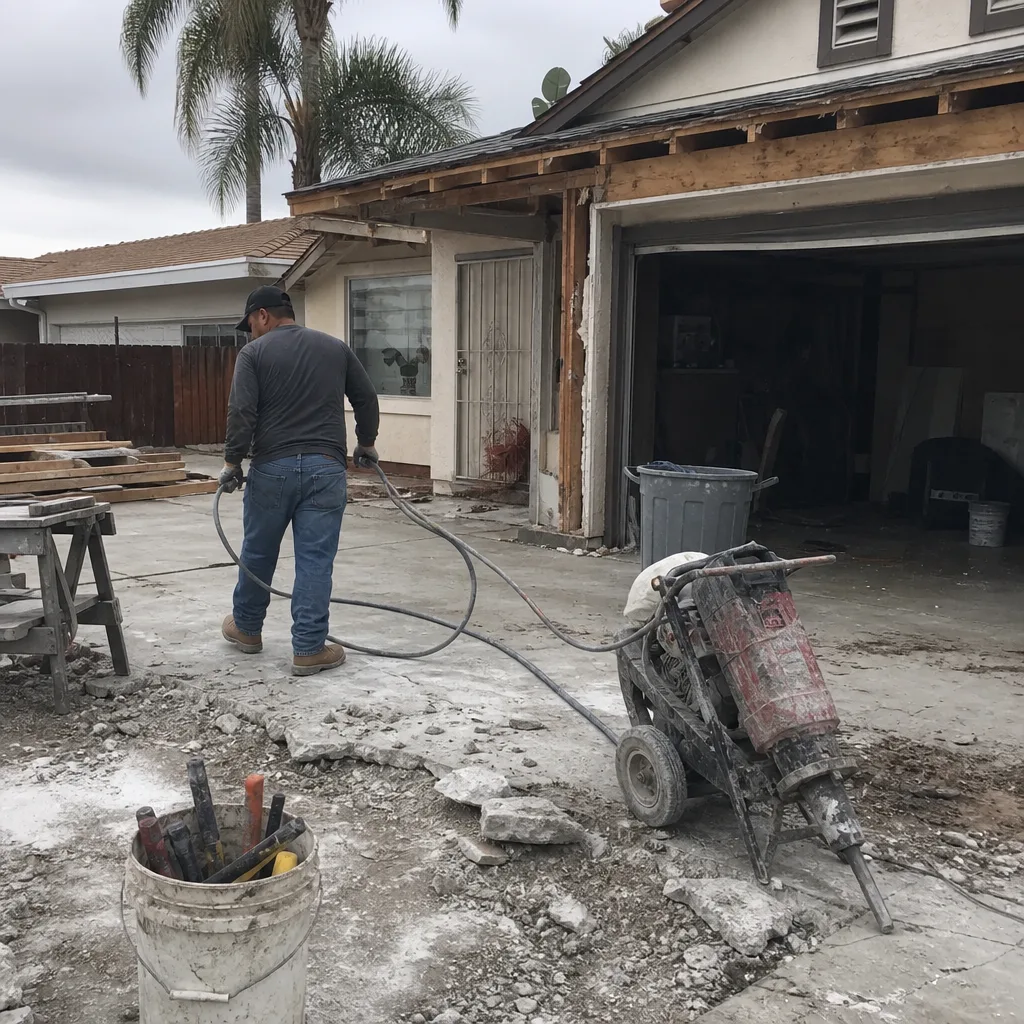
- Concrete and Foundation: $8 to $18 per square foot for standard slab work. Expansive soils may require post-tension or deeper footings, adding $3 to $7 per square foot. Retaining walls run $45 to $90 per square foot of face area depending on block type and drainage requirements.
- Framing: $12 to $25 per square foot for standard lumber framing. Structural steel for open-concept spans adds $4,000 to $15,000 per beam depending on span and load. Lumber pricing has stabilized since 2023 but remains sensitive to mill capacity and Canadian export policy.
- Roofing: $6.50 to $12 per square foot installed for asphalt shingle systems, including tear-off of existing roof. Tile roofing runs $14 to $28 per square foot. Flat roof sections, common with mid-century Moreno Valley ranch homes, require modified bitumen or TPO systems at $9 to $16 per square foot.
- Windows and Exterior Doors: Mid-grade vinyl retrofit windows at $700 to $1,400 per opening installed. New construction flanged windows at $900 to $1,800 per opening. Entry door replacement at $3,500 to $9,000 depending on material. Sliding patio doors at $4,000 to $12,000. Impact-rated systems required in some zones add 30 to 50 percent.
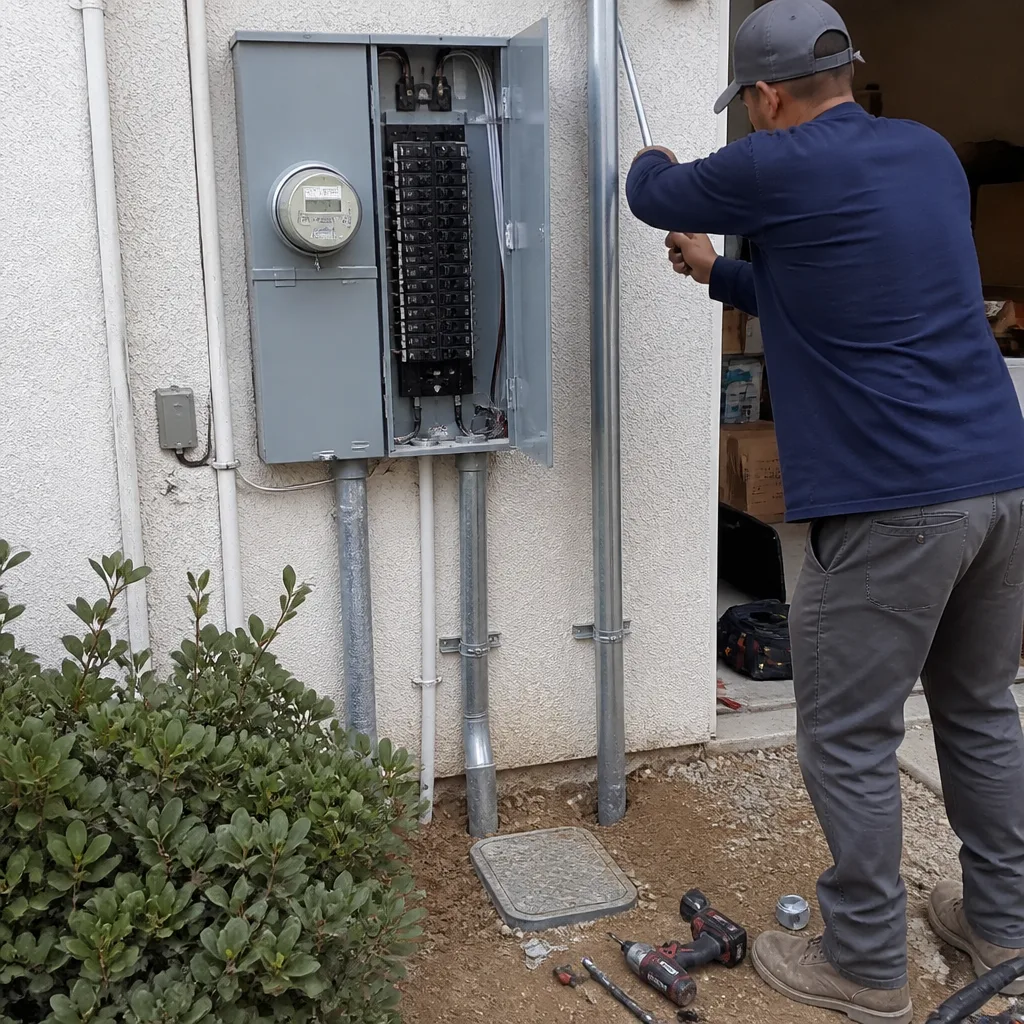
- Rough Mechanical, Electrical, Plumbing (MEP): Full rough-in for an addition runs $18 to $35 per square foot. Panel upgrades from 100-amp to 200-amp service at $4,500 to $8,500. Repiping an existing home at $8,000 to $20,000 depending on access. HVAC rough-in with new ducting at $12,000 to $28,000 for a typical 2,000-square-foot home.
- Insulation: $1.50 to $4.50 per square foot installed, with Moreno Valley Title 24 requirements typically calling for R-38 attic and R-13 to R-19 wall insulation. Spray foam runs $4 to $8 per square foot and often pays for itself in cooling cost reduction given local summer temperatures.
- Drywall: $2.50 to $5 per square foot hung, taped, and textured. Level 5 smooth wall finish adds $1 to $2 per square foot. Ceiling work adds labor time due to lift requirements.
- Cabinetry: Semi-custom lines for a standard 10×10 kitchen at $12,000 to $28,000 installed. Custom cabinetry runs $30,000 to $70,000 for the same footprint. Bath vanities at $2,500 to $8,000 per unit installed.
- Countertops: Quartz at $85 to $140 per square foot installed. Granite at $70 to $120. Butcher block at $50 to $90. Large-format porcelain slab at $100 to $180. Edge profiles and backsplash height affect final pricing.
- Finish Work: Flooring installation at $6 to $18 per square foot depending on material grade. Interior door and trim packages at $3,000 to $9,000 for a typical four-bedroom home. Paint at $4 to $8 per square foot of wall area for full interior repaint.
These line items, not a blended per-square-foot number, are what shape your actual budget. A home remodeling project in Moreno Valley priced this way gives you line-item visibility before you commit. That’s the only way to compare bids accurately.
How Inland Empire Labor Rates Actually Work
Two contractors in Moreno Valley can price the identical scope $18,000 apart and both be making the same margin. The difference is their subcontractor network.
Labor in the Inland Empire operates on a tiered subcontracting structure. Tier-one subs run crews for tract builders and large commercial projects. They bill the highest rates and prioritize production volume. Tier-two subs work primarily for established residential GCs. Their pricing is 15 to 25 percent below tier one, and their availability tracks with housing starts. Tier-three operators are smaller crews, often two to four people, who price lower still but may not carry the same insurance depth or have the same license history.
What this means for your bid: a contractor with established tier-two relationships pays more than a tier-three operator but far less than what an LA County contractor pays for equivalent work. LA County labor rates run 20 to 35 percent higher across most trades due to commute costs, higher workers’ comp classifications, and union density. A Moreno Valley contractor drawing from the same Inland Empire labor pool as Riverside, Corona, and Ontario contractors will land within a few percentage points of those markets, not double digits apart.
The variable is schedule management. A GC who keeps crews moving continuously through a project costs less than one whose schedule has gaps, because subs price idle time into every bid. That’s why single-accountability project management matters. We coordinate trades, materials, and timelines so framing doesn’t sit waiting on plumbing and drywall crews aren’t paid to stand around. The efficiency shows up in your line items, not as a discount line. It’s built into the pricing structure itself.
Permits, Fees, and Soft Costs Homeowners Underbudget
Construction cost guides focus on sticks and bricks. Homeowners planning a Moreno Valley project need to budget for the administrative layer that sits on top, starting with Construction Permits, Codes & Inspections in CA: What You Need to Know.
- Plan check fees: The City of Moreno Valley charges building permit fees based on project valuation. Plan check typically runs 65 percent of the permit fee. For a $150,000 addition, expect combined permit and plan check costs of $4,000 to $7,000.
- School fees on additions over 500 square feet: Riverside County imposes developer school impact fees on residential additions exceeding 500 square feet. Current rates run approximately $4.50 per square foot on the added area, which on a 600-square-foot addition adds roughly $2,700.
- Soils report requirements: Given Moreno Valley’s expansive clay soils, the City frequently requires a geotechnical soils report for additions and ADUs. A soils report runs $2,500 to $5,000. If the report recommends post-tension or pier systems, foundation costs shift upward by 20 to 40 percent.
- Utility connection fees for ADUs: When an ADU requires a new electrical service drop, sewer lateral, or water meter, connection fees from Moreno Valley Electric Utility and the water district can total $8,000 to $25,000 depending on the scope and existing infrastructure.
- Title 24 energy compliance: California’s Title 24 requirements mandate energy modeling on most remodels and all additions. Compliance documentation runs $800 to $2,500 depending on project scope. Mandatory solar on new construction and major additions adds another structural and electrical scope to price.
- Engineering and structural calculations: Any wall removal, beam installation, or foundation modification requires structural engineering. Standard calculations run $1,200 to $4,000 per project. Complex open-concept remodels may require full structural drawings at $5,000 to $10,000.
Budget 8 to 15 percent of total project cost for soft costs on a typical Moreno Valley remodel. On additions and ADUs where school fees and utility connections apply, push that to 15 to 20 percent. A competent home renovation contractor in Moreno Valley includes these line items in the estimate from day one, not as a surprise change order after permits are pulled.
Material Grades: Where Specification Choices Move the Number
Across a full remodel, material specification can swing total cost by 40 percent or more. Three categories move the needle most in Moreno Valley projects: countertops, windows, and roofing. Here’s what the actual spread looks like at current Inland Empire supply pricing.
Countertops: Entry, Mid, Premium
- Entry-grade: Laminate at $35 to $60 per square foot installed. Entry granite or prefabricated quartz at $65 to $85. Functional, current, and perfectly acceptable for rental units or budget-sensitive flips.
- Mid-grade: Standard quartz slab at $85 to $120 per square foot installed. This is the sweet spot for most Moreno Valley remodels. We typically specify Cambria or Caesarstone in this range because their manufacturing tolerances produce consistent slab thickness and predictable fabrication results. Granite in the $75 to $110 range offers similar positioning with natural stone variation.
- Premium: Full-height quartz backsplash, waterfall edges, and book-matched slabs push installed pricing to $140 to $200 per square foot. Large islands without seams require jumbo slabs that add material waste. Natural quartzite, at $180 to $300, costs more due to quarry scarcity and fabrication difficulty.
Windows: Performance Dictates Price
- Entry-grade: Standard vinyl retrofit windows at $700 to $1,000 per opening. They meet Title 24 energy requirements but come in limited size configurations and finish options.
- Mid-grade: Premium vinyl or entry fiberglass at $1,100 to $2,000 per opening. Better glass packages, cleaner sightlines, and larger operating sizes.
- Premium: Fiberglass, aluminum-clad wood, or impact-rated systems at $2,200 to $5,000 per opening. In Moreno Valley, impact-rated windows and doors from manufacturers like PGT and CGI matter when remodel scope includes exterior openings that now require tempered or impact glazing under current code. We’ve priced enough window replacements to know that the line item that looks optional at bid time is often the one a plan checker requires after submittal.
Roofing: System Choice, Not Just Shingle Choice
- Entry-grade: Three-tab shingles at $6 to $8 per square foot installed. Minimum code compliance, 25-year manufacturer warranty, basic underlayment.
- Mid-grade: Architectural shingles at $8 to $11 per square foot installed. We specify GAF Timberline and CertainTeed Landmark most often in this range because their dimensional profiles and wind warranties hold up well in Santa Ana wind conditions that hit the Moreno Valley foothills. Owens Corning Duration and IKO Cambridge are comparable options. This grade represents the value sweet spot for local homes.
- Premium: High-wind architectural shingles, standing seam metal, or concrete tile at $12 to $28 per square foot installed. The “cool roof” rated systems reduce attic temperatures measurably during Moreno Valley summers, which lowers cooling demand on second-story spaces.
Material choice is not a luxury conversation. It’s a performance and longevity conversation. Your project, your material choices – that’s how we run every estimate.
Contingency Logic by Project Type
Contingency is the line item that separates homeowners who finish their project from those who pause halfway through for refinancing. Here’s how we think about reserve allocation by project type in Moreno Valley.
- Kitchen and bathroom remodels in homes built after 1990: Reserve 8 to 10 percent. These projects carry predictable scope once walls are opened. The variance typically appears in plumbing rough-in condition and hidden subfloor damage under existing tile.
- Whole-home remodels in homes built before 1990: Reserve 12 to 15 percent. Moreno Valley has a substantial inventory of 1970s and 1980s construction. Older electrical panels often lack grounding upgrades required by current code. Galvanized supply lines may be at end of service life. Asbestos in vinyl flooring or acoustic ceiling texture requires abatement. Each of these is a known risk, but fixing them correctly changes the line-item structure.
- Additions and ground-up construction: Reserve 10 to 12 percent minimum. Expansive soil conditions may require engineered foundation adjustments once excavation begins. Utility connection depths vary by lot. School fee calculations get finalized through the City, not at bid time.
- ADU construction: Reserve 15 percent on garage conversions and 10 percent on prefab or panelized builds. Garage conversions in Moreno Valley frequently uncover slab deficiencies that must be addressed before wall framing can proceed. Prefab ADUs from manufacturers like Abodu or Mighty Buildings reduce on-site labor variance but utility connection costs remain lot-specific.
The pattern: contingency is not a markup. It’s a recognition that existing conditions in Moreno Valley’s housing stock, built across multiple decades under different code regimes, do not always match what drawings assume—something we cover in our Construction Warning Signs: A Moreno Valley Homeowner’s Reference Guide. A contractor who refuses to discuss contingency is not saving you money. They’re deferring a cost you’ll pay either way.
Common Mistakes to Avoid
- Basing your budget on national per-square-foot averages. National data blends markets with fundamentally different labor structures. A Moreno Valley project priced against the same per-square-foot figure as a Kansas City remodel will be wrong by 30 percent or more.
- Selecting a contractor before selecting material grades. When you compare bids that assume different cabinetry lines, different window packages, and different roofing systems, you’re comparing opinions, not prices. We always recommend locking material specifications before sending the project to bid.
- Ignoring soft costs until the permit desk informs you about them. School fees, plan check charges, and utility connection fees are not optional in Moreno Valley. They are statutory and structural. Budget them from day one.
- Assuming a project with no structural changes means low contingency. Opening walls in a 1980s Moreno Valley home can reveal electrical, plumbing, or framing conditions that must be corrected before inspection will pass. Reserve appropriately.
- Overlooking Title 24 energy requirements in remodel planning. California’s energy code applies to most remodel scopes, not just new construction. When a renovation triggers energy compliance, the project may need attic insulation upgrades, window performance verification, or HERS testing you did not plan for.
- Choosing materials based on showroom appearance alone. The countertop slab that looks perfect under showroom lighting may not match your cabinetry finish under Moreno Valley’s natural light. Request samples in your home, next to your cabinets, before signing.
- Hiring based on lowest bid without checking license, insurance, and subs. The California Contractors State License Board verifies license status online in minutes. Workers’ compensation insurance verification is equally quick. Skip this check at your own risk.
When to Call a Professional
Some construction decisions are investigatory and reversible. Others are structural and expensive to correct. You need a professional when the project involves foundation modification, load-bearing wall removal, roofing system selection with warranty implications, or any scope requiring plan check submittal to the City of Moreno Valley. You also need a professional when your remodel triggers Title 24 compliance, when asbestos or lead paint is a possibility in pre-1978 construction, or when the project spans multiple trades that must coordinate in sequence. Trying to manage a full kitchen remodel with separate cabinet, countertop, plumbing, and electrical contractors without a single accountable coordinator is how schedules slip and budgets break. Moreno Valley Builders offers free estimates in Moreno Valley – call (877) 752-3154.
Frequently Asked Questions
A full kitchen remodel in Moreno Valley typically costs $45,000 to $110,000 including cabinetry, countertops, plumbing, electrical, flooring, and finish work at mid-grade specification. Entry-level remodels with stock cabinetry and laminate counters can start around $30,000, while premium kitchens with custom cabinetry and stone slab counters run $120,000 and up. Call (877) 752-3154 for an exact quote – estimates are free.
A typical single-story addition in Moreno Valley takes 4 to 7 months from plan submittal to final inspection, with plan check and permitting consuming the first 6 to 10 weeks—timeline risks every homeowner should prepare for using our Construction Emergency Preparedness Guide for Moreno Valley Homes. Soils reporting requirements, school fee processing, and utility coordination add time to the front end. Prefab and panelized systems can compress construction time significantly.
With a properly detailed scope of work and line-item estimate, pricing should not change unless concealed conditions are uncovered or you change specifications mid-project. This is why contingency exists, and why written line-item quotes with fixed pricing on specified materials matter. Ask for a fixed-price contract on all specified scope before work begins.
You need a soils report for additions, ADUs, and foundation modifications in Moreno Valley. The City frequently requires geotechnical evaluation due to the expansive clay soils across much of the city. A standard remodel that does not touch foundation or add square footage typically does not require one.
An ADU in Moreno Valley costs $180,000 to $350,000 depending on construction method, site conditions, and utility connection requirements. Garage conversions run lower, ground-up detached ADUs run higher, and prefab systems from manufacturers like Abodu, Boxabl, or Dvele can reduce on-site construction time and labor variance.
If your roof is within five years of its expected service life, replace it before starting interior work. A roof failure after new drywall, insulation, and finishes are installed costs far more than sequencing the roof first. In Moreno Valley, Santa Ana wind events test aging roofs every fall, and architectural shingle systems from manufacturers like GAF and CertainTeed with proper underlayment perform measurably better than builder-grade three-tab.
The Bottom Line
Construction costs in Moreno Valley in 2026 are driven by trade-level line items, Inland Empire labor dynamics, local permit and soft-cost structures, and the material grade decisions you make before anyone swings a hammer. National per-square-foot averages are unreliable for local planning. Detailed scopes priced against current local rates are not. If you’re planning a remodel, addition, or ADU, start with a line-item estimate from a licensed Moreno Valley Builders home contractor who manages every phase under one roof. One contractor, every phase. From permits to punch list. Call (877) 752-3154 to schedule your free estimate.
Written by the team at Moreno Valley Builders, serving Moreno Valley since 2017. Explore more guides & resources.
See the difference
 Before
 After
 Before
 After
 Before
 After