Last updated October 30, 2026
 Home additions & ADU
 Kitchen remodeling
 Bathroom remodeling
 Roofing
 Windows & doors
 Driveway & pavers
 Fence
Free written scope consultation - allowances, timeline, and change-order rules on paper before a single trade is scheduled
Seasonal Construction Care for Moreno Valley: Year-Round Homeowner’s Guide
Moreno Valley doesn’t experience four equal seasons. It experiences a brutal heat season that stretches from late April into October, a short and occasionally intense winter rain window, and shoulder periods where Santa Ana winds create their own distinct hazard profile. A maintenance calendar built for Sacramento or San Diego will leave your home underprepared for a region where 100°F days arrive by May and 60 mph wind gusts can hit in November. This guide maps construction and maintenance to the weather patterns of Moreno Valley specifically, so you spend your time and money on what actually fails here, not on generic checklists written for somebody else’s climate. For a deeper look at local building considerations, see The Complete Guide to Construction in Moreno Valley.
Quick Answer
Seasonal construction care in Moreno Valley means preparing for heat before it arrives in April or May, monitoring your home’s exterior and roof during the sustained 100°F+ months, inspecting for wind damage after every Santa Ana event, and using the short rain window from December through February to check drainage, stucco, and window seals. The most expensive repairs in Moreno Valley are almost always deferred heat damage and wind-driven water intrusion, both of which are largely preventable with a calendar that follows the actual weather, not the traditional four seasons. Our The Complete General Contractor Guide for Moreno Valley Homeowners covers how to vet and work with pros who understand these patterns.
Styles & brands we work with
Table of Contents
- April – May Pre-Heat Season Protocol
- June – September Heat Season Monitoring
- September – November Santa Ana Wind Window
- December – February Rain Season Preparation
- Scheduling Construction Projects Around Moreno Valley’s Seasons
- Material Selection for Moreno Valley’s Climate
- Common Mistakes to Avoid
- When to Call a Professional
- Frequently Asked Questions
April – May Pre-Heat Season Protocol
By mid-April, daytime highs in Moreno Valley regularly cross 90°F, and roof surfaces can reach 140°F or more. Whatever inspection or repair work needs to happen on your exterior envelope should happen before that threshold arrives. Once summer heat sets in, roof access becomes physically difficult and some materials, particularly asphalt shingles, become soft and prone to damage from foot traffic. The pre-heat window is your best opportunity to catch problems while they’re still cheap to fix.
Start with the attic. In Moreno Valley, attic temperatures during summer can exceed 150°F if ventilation is inadequate. That heat doesn’t just strain your HVAC system; it bakes the underside of your roof decking and accelerates shingle degradation. Check that ridge vents, soffit vents, and any powered attic fans are clear of debris and functioning. If your attic has no ventilation or you’re unsure, this is the time to evaluate adding it.
Next, inspect the exterior envelope. Walk the perimeter and look for gaps in stucco, cracked caulk around windows and doors, and any wood trim that’s showing signs of sun damage from the previous year. In Moreno Valley, the intense UV exposure means exterior caulking typically has a shorter service life than product labels suggest. We specify high-quality sealants from manufacturers that build for sustained UV and we re-caulk aggressively because the cost of water intrusion later is exponentially higher than a tube of sealant now.
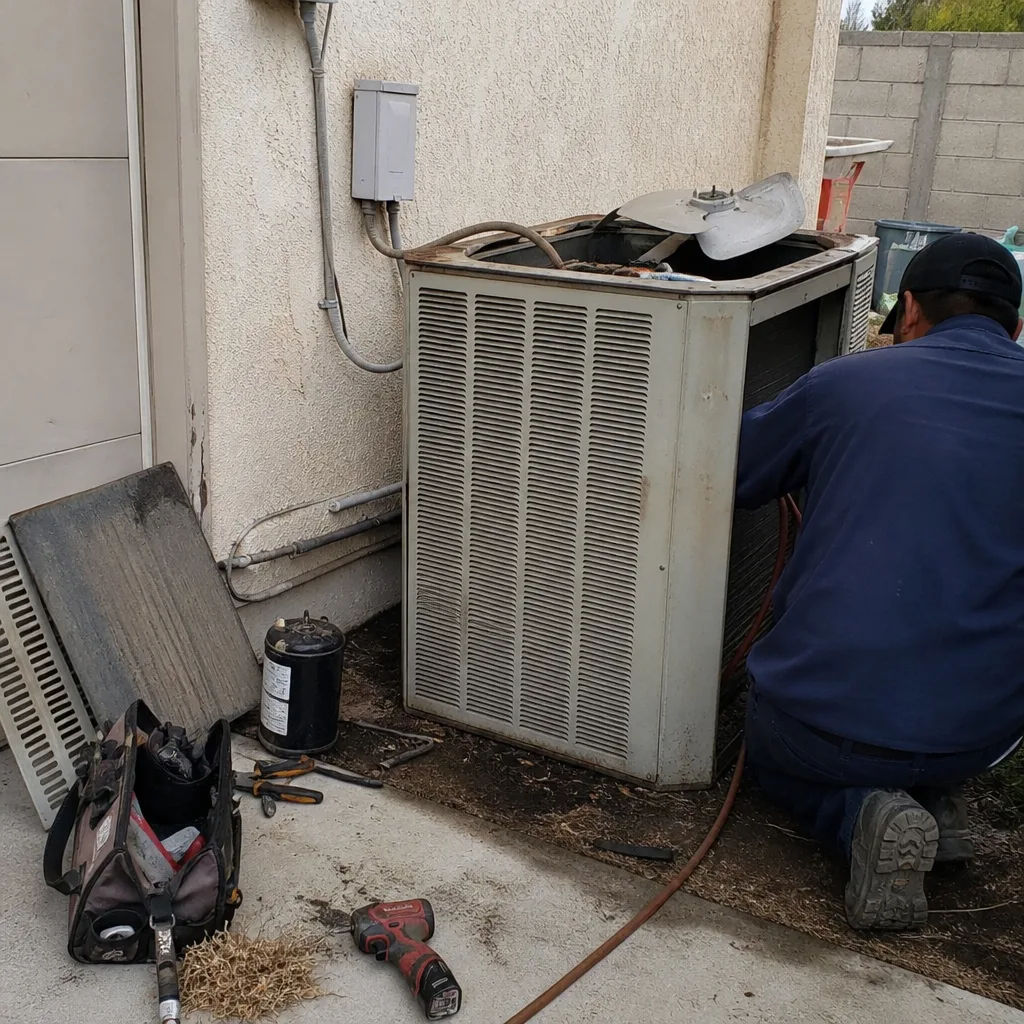
- Schedule HVAC service in April. Replace filters, have the condenser coils cleaned, and verify the system can hold temperature. Contractors get booked solid by June; April scheduling avoids both the rush and the first heat wave.
- Inspect roof flashing and vent boots. Flashing failures are the leading cause of roof leaks in Moreno Valley, and the intense summer sun expands and contracts metal flashing, loosening seals over time. Catch small failures before the rare but heavy winter rain finds them.
- Clear gutters and downspouts. Even if you don’t have trees overhanging, wind-blown debris accumulates. A clogged gutter in Moreno Valley sits dry for months and then overflows exactly when the first heavy rain arrives.
- Check exterior paint and wood trim. South- and west-facing surfaces take the worst sun. If paint is chalky or peeling, repair and repaint now. Bare wood in Moreno Valley dries out and cracks within a single summer.
- Test window and door seals. Run a hand around the interior frame on a windy day. You should feel no air movement. If you do, replace weatherstripping before cooling season drives your energy bill up.
For homeowners considering any exterior work, this is the best scheduling window of the year. Roofing, siding, window replacement, and exterior painting all perform better when installed in moderate temperatures. A general contractor in Moreno Valley can coordinate these scopes so you’re not sequencing them poorly across a summer that punishes exposed work.
June – September Heat Season Monitoring
Moreno Valley typically sees 90 to 110 days per year above 90°F, with June through September delivering sustained triple-digit stretches. During this season, your job shifts from preparation to monitoring. The two systems that fail most often during sustained heat are roofing materials and exterior trim, particularly composite materials that expand and contract at different rates than the framing beneath them.
On the roof, look for signs of thermal stress. Asphalt shingles can develop curling edges, blistering, or granule loss when exposed to repeated high-heat cycles. Tile roofs, common throughout Moreno Valley, can develop hairline cracks that expand in the heat and allow water in during winter rains. Walk your property line with binoculars or take photos and zoom in; you don’t need to be on the roof to spot the early warning signs.
Composite decking is another heat-sensitive material we see throughout the area. In direct Moreno Valley sun, dark composite decking can reach surface temperatures high enough to be uncomfortable for bare feet and can develop expansion-related issues at butt joints and fasteners. We specify composite decking brands with documented heat performance and we account for thermal expansion in our installation specifications because the gap requirements here are different than for coastal installations. If you notice deck boards buckling, cupping, or popping fasteners, document it now and plan a repair for the fall shoulder season.
Wood trim and siding also deserve attention. The combination of intense UV and dry air causes wood to shrink and crack. Check fascia boards, door frames, and any exposed beams. A crack that opens in July becomes a water channel in February. Paint fails on a faster timeline in Moreno Valley than in coastal Southern California; plan on repainting south- and west-facing surfaces every five to seven years rather than the eight to ten you might get elsewhere.
During heat waves, your HVAC system is running hard. Listen for unusual sounds, watch for short cycling, and track whether the system is holding temperature. More importantly, check your condensate drain line. In Moreno Valley’s dry heat, the drain line can dry out and clog with sediment, then back up when the first humid day arrives. A quarterly cup of white vinegar or a designated HVAC-safe cleaner down the line keeps it flowing.
September – November Santa Ana Wind Window
Santa Ana winds in Moreno Valley can arrive any month from September through April, but they peak in frequency and intensity from October through December. Unlike the heat season, which stresses materials slowly, Santa Ana events are acute. One night of 50 to 70 mph gusts can do in hours what takes the summer months to accomplish. After every significant Santa Ana event, perform a post-wind inspection.
Start at the roof. Wind doesn’t usually rip shingles off in a single dramatic moment; it works the edges, loosens the seal strips, and leaves the roof primed for failure in the next rain. Look for lifted shingle edges, missing ridge caps, and any tile that has shifted. Pay particular attention to the roof edges and gable ends, which catch the most wind force. If you see loose material, get it repaired before rain hits.
Check flashing around chimneys, vents, and any roof penetrations. Santa Ana winds drive dust and debris under lifted flashing, compounding the damage. The sealant around vent pipes and exhaust fans is particularly vulnerable. In our experience, wind-driven debris accounts for a significant share of the roof repair calls we see each year in Moreno Valley.
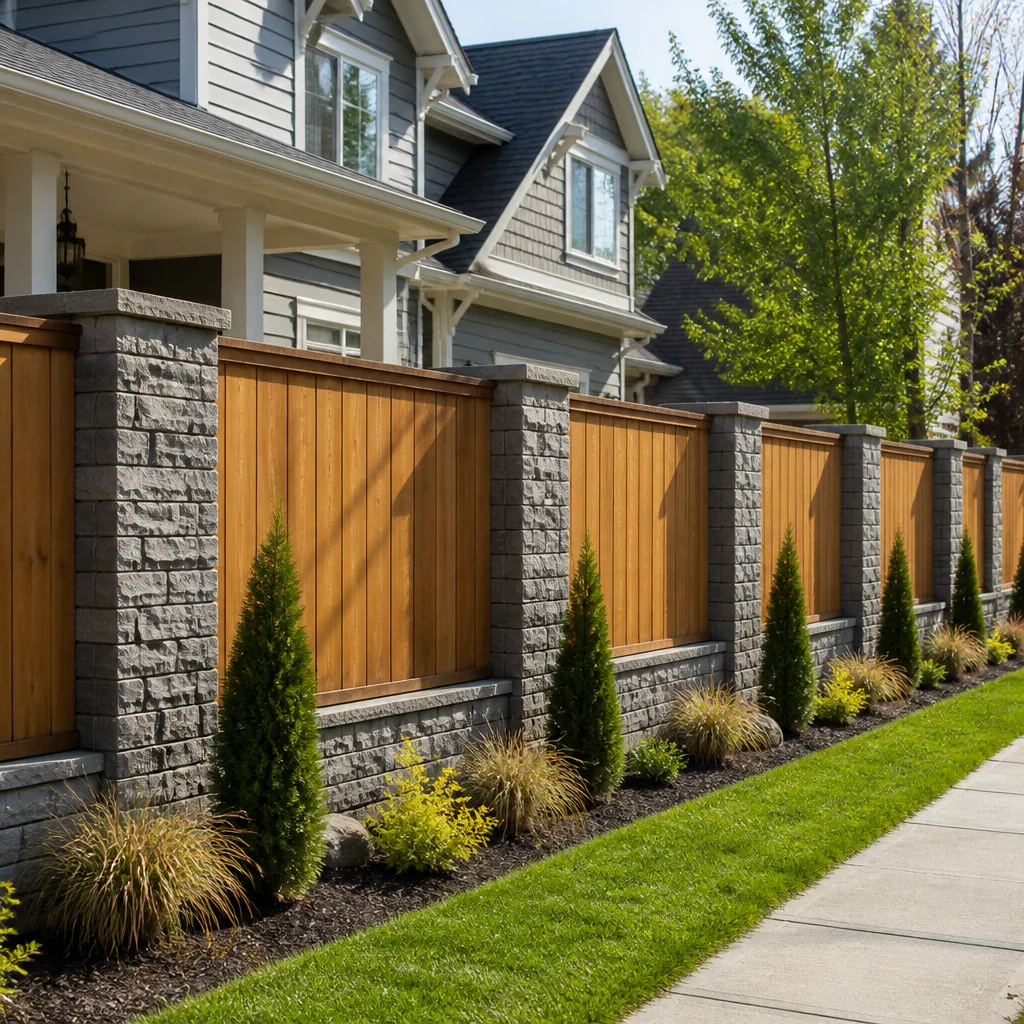
Next, inspect perimeter fencing. High winds put enormous lateral pressure on fence panels, and the dry soil conditions that often accompany Santa Ana events reduce post stability. Walk the fence line and push gently against each post at the top. Any post that moves more than an inch or two at the top has lost soil contact and needs attention. If you’ve had recent exterior work done, particularly fencing or siding, this inspection matters more, because new installations haven’t yet settled and can be more vulnerable to wind.
Finally, check gutters and downspouts even though there’s been no rain. Santa Ana winds strip leaves, palm fronds, and dust from the surrounding hills and deposit them in your gutter system. A gutter that looks clean in October can be completely choked with wind-blown debris by December. Clearing them during the wind season is cheap insurance against overflow during the first heavy rain.
December – February Rain Season Preparation
Moreno Valley receives most of its annual rainfall between December and March, but it arrives in a small number of high-intensity events rather than a steady drizzle. The region averages roughly 12 to 15 inches per year, which can fall in a handful of storms. A rain season of this character punishes drainage deficiencies and any exterior envelope weakness that has been accumulating all year.
The first priority is drainage. Walk your property during or immediately after a rain event and watch where water flows. Check that the ground slopes away from the foundation on all sides, that downspouts discharge at least three to five feet from the structure, and that no water ponds anywhere within the first six feet of the home. In Moreno Valley, many homes sit on a slope, and downhill neighbors receive your runoff. French drains, swales, and proper downspout extensions are often the difference between a dry crawlspace and a water intrusion problem after a heavy storm.
Stucco deserves particular attention. Stucco is common throughout Moreno Valley and performs well in dry heat, but it’s relatively brittle and can develop hairline cracks from seismic settling, soil expansion, and thermal cycling. Walk the exterior and mark every crack wider than a hairline. Narrow cracks can be sealed with a paintable elastomeric caulk. Wider cracks, especially around window and door openings, indicate movement and should be evaluated before the next rain season. Unsealed cracks allow water to penetrate the stucco and make contact with the sheathing and framing behind it, which begins a decay process that’s invisible until the repair gets expensive.
Window and door seals should be re-checked before the rains. The dry heat of summer can shrink and crack weatherstripping, and the first heavy rain exposes every gap. Pay attention to the bottom sweeps on exterior doors and the sealant joints around window frames. If you’re planning window replacement in the near future, this is the season when your old windows will show you exactly where they’re failing.
Scheduling Construction Projects Around Moreno Valley’s Seasons
If you’re planning a remodel, addition, or home remodeling project in Moreno Valley, timing matters more than most homeowners realize. The window between late September and mid-November is the sweet spot for starting major exterior work. Temperatures are moderate, rain is still unlikely, and Santa Ana winds are less frequent than in December and January. Exterior paint, stucco, roofing adhesives, and concrete all cure more predictably in this window.
Avoid starting exterior work in the June through August heat. It’s not just uncomfortable for crews; it changes material behavior. Paint flashes too quickly, stucco can shrink-crack as it cures, and asphalt shingles can bond too aggressively, making future repairs more likely to cause damage. If your project must run through summer, interior work is the better choice. Framing, electrical, plumbing, drywall, and cabinetry installation are all largely weather-independent once the envelope is closed.
For permit scheduling, plan around the city’s inspection calendar. Moreno Valley’s building department processes permits year-round, but the weeks around major holidays and the end of the calendar year see both staffing reductions and a surge in applications from homeowners trying to use expiring budgets. Submit permit applications in early to mid-fall for the smoothest processing. If your project starts in spring, submit by late January to avoid the spring rush.
Homeowners planning an ADU or prefab addition have additional scheduling flexibility. Off-site construction from brands like Dvele, Boxabl, Plant Prefab, and Mighty Buildings means the structure is built in a controlled environment, reducing weather-related delays on the fabrication side. However, site preparation, foundation work, and utility connections still happen outdoors and follow the same seasonal logic. We typically sequence ADU site work for the fall window and schedule the delivery and set for late winter or early spring, when the structure itself won’t be fighting the heat.
Material Selection for Moreno Valley’s Climate
Any material installed on a Moreno Valley home should be specified with three local conditions in mind: extreme UV exposure, sustained high temperatures, and infrequent but intense rain. Products that perform well in milder climates can fail prematurely here, and we see it regularly in home renovation work done with materials chosen for price rather than climate compatibility.
For roofing, we specify GAF and CertainTeed asphalt shingle lines with high wind ratings and documented UV performance. Owens Corning, IKO, Atlas, and Tamko all produce excellent products, and the choice often comes down to the specific roof geometry, the homeowner’s aesthetic direction, and the warranty structure that fits their situation. The key isn’t brand loyalty; it’s making sure the product installed is rated for the conditions it will face.
For siding, James Hardie fiber cement is a common specification for Moreno Valley because it resists both the dry heat and the UV that would break down lesser materials. It also handles the thermal swings between summer highs and winter lows without the expansion-related issues seen with some vinyl products. For windows and doors, we specify from brands including PGT, CGI, Therma-Tru, and ECO Window Systems, with an eye toward impact ratings and thermal performance that matter more in this climate than homeowners might expect before their first summer electric bill.
Plumbing fixtures from Kohler, Moen, Delta, Grohe, American Standard, Toto, Blanco, and Sterling all have proven histories, and the selection process comes down to design direction, budget tier, and the specific demands of Moreno Valley’s water conditions. Similarly, hardscape materials from Belgard, Unilock, Techo-Bloc, and Cambridge Pavers hold up well in the high-heat, low-moisture environment if installed over properly prepared base material. The brand matters less than the installation spec when it comes to pavers and retaining walls.
Common Mistakes to Avoid
- Following a generic four-season maintenance calendar. Advice written for regions with real winters has you winterizing sprinklers in October. In Moreno Valley, the useful move is the opposite: prepare for heat in spring and for rain in late fall. Skipping the April pre-heat inspection because a generic list says “inspect in fall” is how small roof issues become January leaks.
- Climbing onto your roof during the heat season. Roof surfaces in Moreno Valley regularly exceed 140°F in summer. Foot traffic on hot asphalt shingles causes granule loss and can compress the material permanently. Whatever needs to be inspected can be done from the ground or from a ladder, or scheduled for the shoulder season.
- Ignoring small stucco cracks. A hairline crack in November is a water channel in January. The repair cost difference between sealing a crack and remediating water-damaged sheathing behind stucco is often tenfold or more.
- Deferring gutter cleaning because there are no trees overhead. Santa Ana winds carry debris from far beyond your property line. Gutters that look clean in September can be packed with wind-blown material by December. Check them after every significant wind event, not just once a year.
- Scheduling exterior painting or stucco work in July. High temperatures cause paint to flash, stucco to cure unevenly, and sealants to skin over before they bond. The product’s label may say it installs up to 100°F, but that doesn’t mean it installs well at 100°F. Fall scheduling produces better results every time.
- Choosing building materials without considering the climate. A deck board that performs well in the Pacific Northwest may cup and warp within two summers in Moreno Valley. Ask about thermal expansion specs and UV resistance before you commit to a material, not after it’s installed.
- Waiting to address a Santa Ana wind issue until the next rain. Lifted shingles and displaced flashing don’t repair themselves, but they do get worse. The repair is cheapest the week after the wind event, not the week before the storm.
When to Call a Professional
Some inspections and repairs are safe and reasonable for a homeowner. Others require training, equipment, and a clear understanding of what failure looks like. Call a professional whenever roof work requires walking on the roof surface, whenever you suspect water has already penetrated the building envelope, whenever you see structural movement like a bowing wall or a settling foundation corner, and whenever a repair involves electrical, gas, or load-bearing systems. Moreno Valley Builders offers free estimates in Moreno Valley – call (877) 752-3154 if you’re uncertain whether an issue is cosmetic or structural.
Frequently Asked Questions
Roof repair in Moreno Valley typically ranges from $350 to $1,500 depending on the scope, with full roof replacements running significantly higher based on material choice and square footage. The most common repairs we see are flashing failures, wind-lifted shingles, and tile cracks, all of which are cheaper to address before rain water gets involved. Call (877) 752-3154 for an exact quote – estimates are free.
The best window for exterior painting in Moreno Valley is late September through mid-November, when temperatures are consistently between 60°F and 85°F and rain is still weeks away. Spring is also workable but compressed, and summer heat causes paint to flash and lose adhesion on warm surfaces.
Yes. Moreno Valley Builders is a licensed general contractor and handles the full permit process from application through final inspection. Moreno Valley Builders home page has more details on our project management approach. Permits are pulled for every project where they’re required, and inspections are scheduled as part of our normal workflow.
Asphalt shingle roofs in Moreno Valley typically last 15 to 20 years, compared to 20 to 25 years in coastal climates, because sustained heat and UV accelerate material degradation. Tile and metal roofs last significantly longer. The single best way to extend roof life here is to maintain attic ventilation, which reduces the heat load on the underside of the roof decking.
After a significant Santa Ana event in Moreno Valley, check your roof edges for lifted shingles or shifted tile, your flashing around vents and chimneys, your gutters for wind-blown debris, and your fence posts for wobble. Most wind damage is identifiable from the ground or with binoculars, and the sooner it’s repaired, the less exposure your home has to the next rain.
Yes. Seasonal scheduling is a standard part of how we plan projects. We sequence exterior work for the fall window, interior work for summer, and prefab or ADU site work for the days when weather conditions support quality installation. Call (877) 752-3154 and we’ll walk through the timing logic for your specific project scope.
The Bottom Line
Moreno Valley’s climate demands a maintenance calendar built around heat, wind, and short rain bursts, not around spring and fall as the rest of the country experiences them. Prepare for heat in April, monitor your home through the summer, inspect for wind damage after every Santa Ana event, and use the brief rain season to verify that drainage and the building envelope are doing their jobs. If a repair or renovation is on your horizon, schedule it for the window when conditions support quality work rather than forcing it into a calendar slot that doesn’t fit this region. For help with inspections, repairs, or full renovation projects, call Moreno Valley Builders at (877) 752-3154 for a free estimate, or browse more guides & resources for Moreno Valley homeowners.
Written by the team at Moreno Valley Builders, serving Moreno Valley since 2017.
See the difference
 Before
 After
 Before
 After
 Before
 After