Last updated October 30, 2026
 Kitchen remodeling
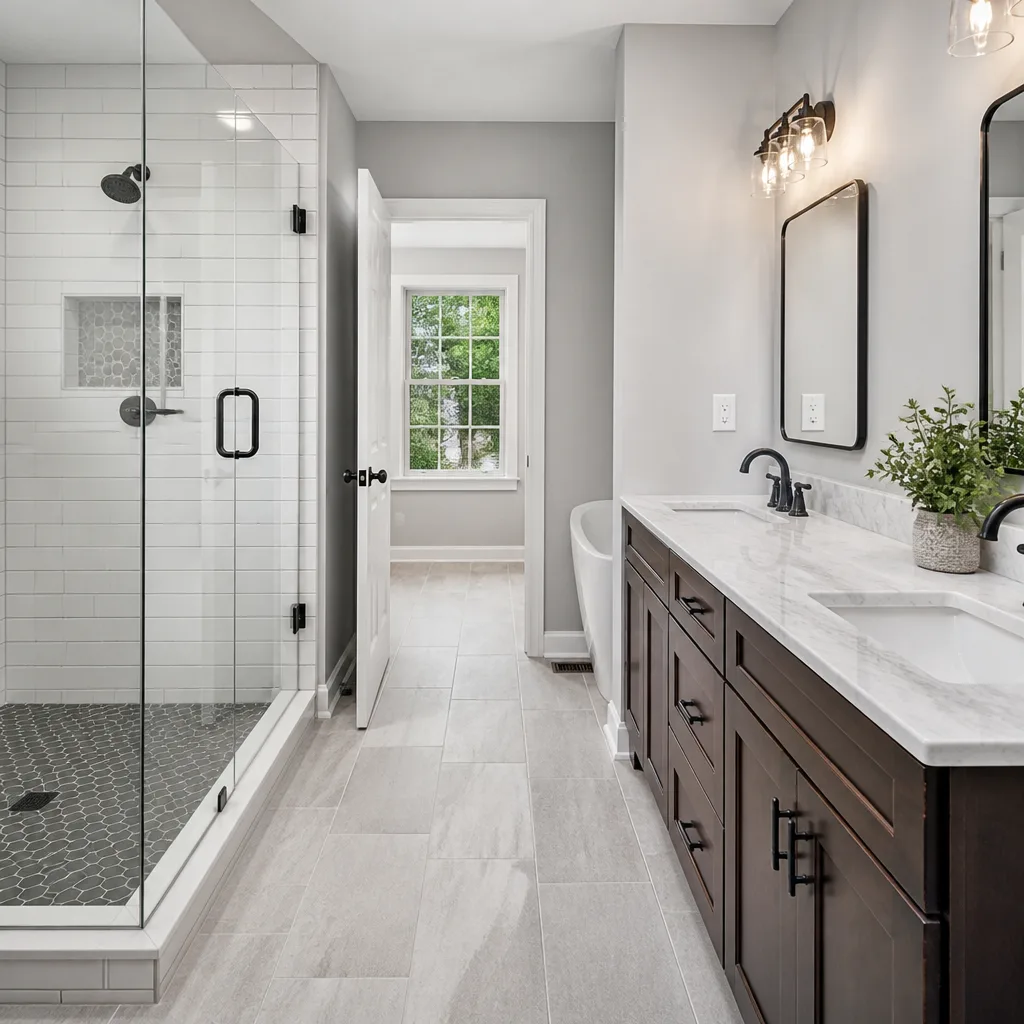 Bathroom remodeling
 Home additions & ADU
 Roofing
 Windows & doors
 Driveway & pavers
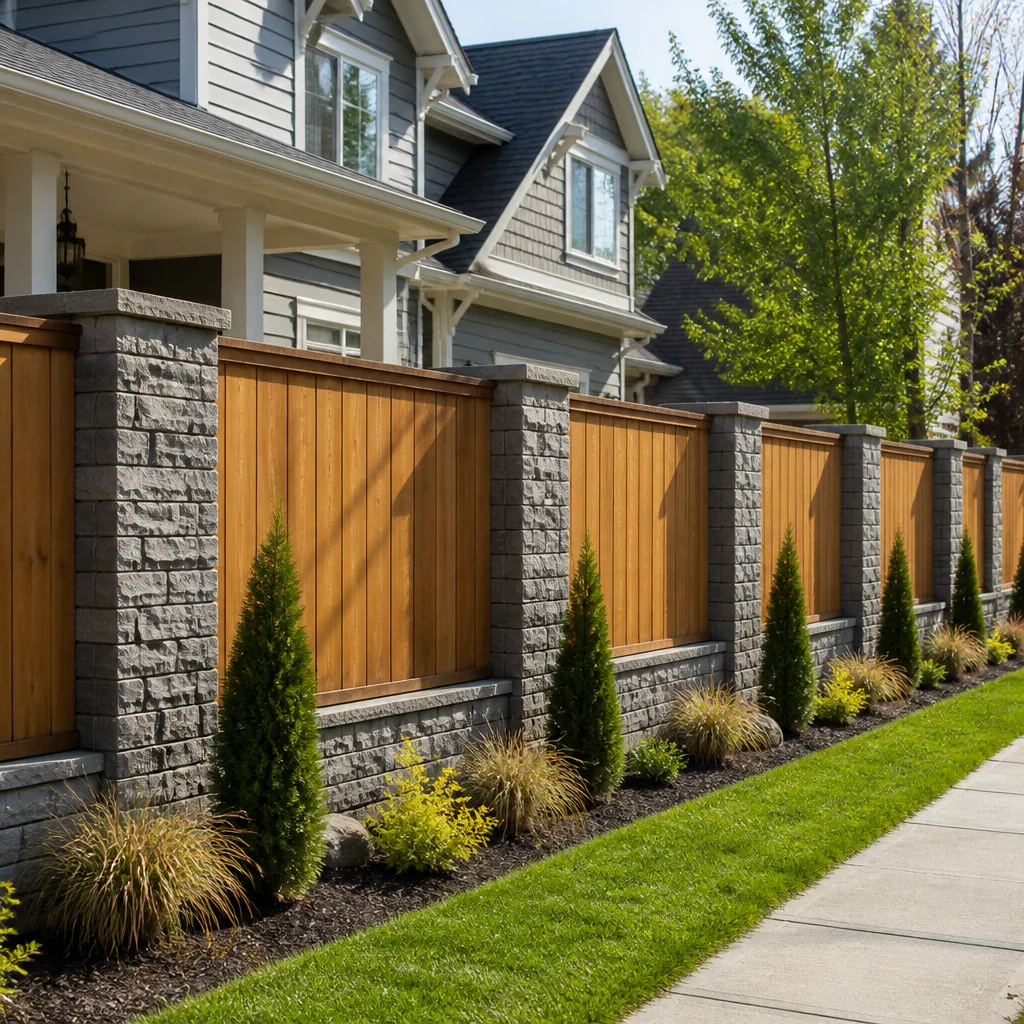 Fence
Free written scope consultation - allowances, timeline, and change-order rules on paper before a single trade is scheduled
How to Hire a Construction Contractor in Moreno Valley: A Step-by-Step Guide
California’s CSLB license lookup takes about 90 seconds and filters out roughly 30% of contractors who quote residential jobs in the Inland Empire. But here’s what most Moreno Valley homeowners get wrong: license status is actually the second thing you should check, not the first. The first is whether the contractor’s license classification even matches the scope of work you’re planning. A painter with a C-33 license can be fully licensed and completely unqualified to run your kitchen remodel. This guide walks through the full verification sequence, the contract terms that matter on projects over $25,000, and the specific red flags that have become common in Moreno Valley since the 2020 remodeling boom flooded the market with new LLCs and out-of-area GCs. For The Complete General Contractor Guide for Moreno Valley Homeowners and more guides & resources, see our blog.
Quick Answer
To hire a construction contractor in Moreno Valley, start by verifying the contractor’s license classification, bond, and workers’ compensation status on the CSLB website, then confirm they have local Inland Empire subcontractor relationships, get three written bids with matching line-item scopes, and sign a contract that includes a payment schedule tied to work milestones, lien release language, and a written change order process. See Choosing the Right Construction Brand: A Buyer’s Guide for Moreno Valley for additional selection criteria. Never pay more than 10% or $1,000 (whichever is less) as a deposit on a California residential project, and walk away from any bid that arrives without material specifications.
Styles & brands we work with
Table of Contents
- Step 1: Run the CSLB License Check the Right Way
- Step 2: Verify the License Classification Matches Your Project
- Step 3: Ask the Questions That Reveal Local Trade Relationships
- Step 4: Get Three Bids and Make Them Comparable
- Step 5: Read the Contract Like a California Attorney Would
- Step 6: Structure Payments to Protect Yourself
- Step 7: Manage the Project Through Final Inspection
- Common Mistakes to Avoid
- When to Call a Professional
- Frequently Asked Questions
Step 1: Run the CSLB License Check the Right Way
California’s Contractors State License Board publishes a free license lookup at cslb.ca.gov. Every legitimate General Contractor in Moreno Valley should appear in this database within seconds. Type in the license number printed on the business card or the legal business name, and the system returns four fields you need to actually read: classification, bond amount, workers’ compensation status, and complaint history.
Here’s what each field means for your Moreno Valley project:
- Classification: A “B – General Building” classification covers most residential remodels and additions. A “C” license with a number after it covers a specific trade only. If you see C-33 (painting) on a contractor who quoted your bathroom remodel, that’s a disqualifier, not a technicality.
- Bond amount: California requires a $25,000 contractor license bond, but many contractors carry more. The bond is your recovery fund if the contractor walks off the job or violates state law. Higher bond amounts signal a contractor who has not had claims filed against them that exceeded the minimum.
- Workers’ compensation status: If the contractor has employees and the CSLB shows no workers’ comp policy, any injury on your Moreno Valley property becomes your liability through your homeowner’s insurance. This is one of the most expensive oversights a homeowner can make.
- Complaint history: The CSLB publishes legal actions, license suspensions, and arbitration awards. A suspended license is an obvious red flag. A pattern of small claims or bonding company payouts is a quieter one.
In our experience running full-scope Home Remodeling in Moreno Valley projects, we’ve seen homeowners discover that the contractor they were about to hire had a license that was revoked three years prior, then reinstated under a different business name. The CSLB lookup catches that in 90 seconds. The homeowner who checks the license before the first site walk saves themselves from becoming a cautionary story.
Step 2: Verify the License Classification Matches Your Project
Here’s the sequence most Moreno Valley homeowners skip: they see “Licensed” on a business card and stop checking. But the B General Building classification is the one that matters for projects involving more than two unrelated trades. If your project includes framing, electrical, plumbing, and finish work, a C-54 tile contractor cannot legally run the job as the prime contractor.
Walk through this checklist for any contractor quoting your project:
- Identify every trade your project requires. A kitchen remodel in Moreno Valley typically involves demolition, rough carpentry, electrical, plumbing, drywall, painting, flooring, cabinet installation, and countertop fabrication. That’s nine trades minimum.
- Confirm the contractor holds a B classification. This is the only residential classification that permits a contractor to contract for and manage work across multiple unrelated trades. Trade-specific C licenses can only contract for their own scope.
- If the contractor only holds a C license, ask who holds the prime contract. Some C-licensed contractors will tell you they “work with other guys” for the rest of the scope. That means you become the de facto general contractor, coordinating schedules, permits, inspections, and liability across multiple parties. You’re doing the job without getting paid for it.
Moreno Valley’s permitting process through the city’s Building & Safety Division requires a single responsible party on record for larger remodels. If your contractor cannot serve as that party because their license classification doesn’t cover the scope, you’ll be filing permits yourself, pulling your own inspections, and holding liability for work sequences you never wanted to manage.
Key Takeaway: License number on the quote. B classification on the CSLB lookup. Both checked before the first deposit changes hands.
Step 3: Ask the Questions That Reveal Local Trade Relationships
Portfolio photos tell you what a contractor finished. Trade relationships tell you what they can execute in Moreno Valley today. The Inland Empire has a distinct subcontractor market: electricians, plumbers, and HVAC crews run routes across Riverside and San Bernardino counties, and the ones who established themselves locally during the 2015-2019 building cycle are now booked solid with reputable GCs. Contractors without local relationships are working with whoever returns their call, which means inconsistent quality and scheduling chaos.
Ask these questions on the first call or site visit:
- “Which electrical subcontractor do you use for Moreno Valley projects?” A specific name delivered without hesitation means the relationship exists. A pause followed by “we have a few we work with” means the contractor is quoting work they haven’t lined up labor for.
- “How far do your subcontractors travel?” Contractors based in Orange County or Los Angeles County often quote Moreno Valley work without local crews. Their subs drive 50-70 miles each way, which shows up in higher pricing, longer schedules, and less willingness to return for punch list items.
- “Who pulls the permits on your Moreno Valley jobs?” The answer should be “we do” or the name of a permit runner the contractor uses regularly. If the contractor suggests the homeowner pull permits, that’s a signal they either don’t have local permitting experience or they’re trying to avoid inspection scrutiny.
- “Can you give me two references from Moreno Valley projects completed in the last 12 months?” Not Riverside. Not Perris. Moreno Valley. Local references mean the contractor has worked with Moreno Valley’s specific inspectors, processed permits through City Hall, and navigated the same climate and soil conditions your project faces.
This matters for Home Renovation in Moreno Valley more than most markets because the city’s growth happened quickly. Tract home neighborhoods built in waves from the 1980s through the 2000s mean your 1998 construction methods differ from your neighbor’s 2015 methods. A contractor who has remodeled in your specific era of Moreno Valley construction knows which surprises to expect behind the drywall.
Step 4: Get Three Bids and Make Them Comparable
Three bids is standard advice. Three comparable bids is harder to execute, and most homeowners skip the work required to make them actually comparable. The goal of multiple bids in Moreno Valley isn’t to find the cheapest price. It’s to reveal which contractors are quoting the same scope, which ones are cutting scope to win the number, and which ones understand what the job actually requires.
Here’s how to structure the comparison so you’re evaluating scope equivalency, not just dollar amounts:
- Give every contractor the same written scope. Do not describe your kitchen remodel verbally to three different contractors and expect comparable bids. Write down what you want: demolition extent, cabinet count, countertop material, appliance specs, flooring square footage, plumbing changes, electrical changes, finish level. If you’ve worked with a designer, hand over the drawings.
- Require line-item material specifications. A bid that says “kitchen cabinets: $18,000” is not comparable to one that says “KraftMaid cabinetry, maple, shaker door profile, soft-close hardware, 14 linear feet uppers, 14 linear feet lowers.” The first bid can quietly substitute builder-grade particleboard cabinets. The second is a commitment. We specify Moreno Valley Builders home projects with named brands because a line item without a brand name is an invitation to substitute whatever clears the contractor’s margin targets.
- Flag the line items most homeowners miss. Foundation work, structural reinforcement, insulation upgrades required by current Moreno Valley building codes, disposal fees, permit fees, and the time required for inspection scheduling. If one bid includes a $4,200 line for “seismic and shear wall upgrades” and the other two don’t reference structural changes at all, the first contractor is reading the code correctly and the other two are leaving scope out of the bid.
- Look for allowance gaps. Allowances are dollar figures the contractor puts in the bid for selections you’ll make later: tile, fixtures, lighting. A bid with a $2,000 tile allowance for a full bathroom is not a real budget. A $5,000 allowance is more realistic for mid-grade tile and proper installation prep. Low allowances are a competitive bid technique that becomes a change order later.
- Compare the payment schedules, not just the totals. A $75,000 bid payable as $7,500 deposit, $22,500 at rough framing, $22,500 at drywall, $15,000 at cabinet installation, and $7,500 at final inspection is a completely different risk profile from a $70,000 bid payable as 50% before work starts and 50% at completion. The payment schedule determines who holds the leverage at every stage.
One more consideration specific to this market: Moreno Valley’s permitting fees and school district impact fees are not negotiable line items. If one bid shows a $9,400 permit fee line and another shows $3,100, the second contractor is either quoting the wrong fee schedule or planning to surprise you later. Ask for the fee schedule to be itemized and verified by the city before signing.
Step 5: Read the Contract Like a California Attorney Would
California law requires certain terms in every home improvement contract. But the law’s floor is a poor ceiling for your protection, especially on Moreno Valley projects over $25,000 where lien exposure and material escalation risk increase substantially.
What California law requires:
- The contractor’s license number printed on every page of the contract
- A payment schedule that does not exceed 10% or $1,000 (whichever is less) for the deposit, with all subsequent payments tied to work completion milestones
- A 3-day right to cancel for senior citizens and a 3-day general right of rescission on contracts signed in your home
- A description of the work to be performed and the materials to be used
- A start date and an estimated completion date
What you should add for projects over $25,000:
- A lien release schedule. Every payment should be conditioned on the contractor providing conditional lien releases from all subcontractors and material suppliers who have performed work or delivered materials to date. Without this clause, you can pay your GC in full and still have a subcontractor file a mechanics lien against your Moreno Valley home because the GC never paid them. Lien releases are your proof that the money flowed downstream.
- A change order authorization threshold. Specify that any change exceeding $500 requires a written change order signed by you before the work proceeds. This prevents the “I thought you said you wanted recessed lighting” conversation after the fact, when the drywall is already up and the electrician’s invoice is on the GC’s desk.
- Material escalation language. Post-2020, certain material categories have seen volatile pricing. Lumber and engineered wood products settled, but specialty items like custom windows and imported tile still move. Your contract should state that material prices are locked for a defined period or that escalation requires documentation and written approval.
- Progress inspection rights. You should have the right to have the work inspected by an independent third party at any milestone before releasing the corresponding payment. On Moreno Valley projects, city inspectors cover code compliance, but they don’t evaluate workmanship quality. An independent inspection by a licensed professional gives you documentation if a dispute emerges.
The contract is where most Moreno Valley homeowners lose leverage. A contractor who resists adding lien release language or a change order threshold is signaling how they handle disputes: by keeping the paperwork vague and the cash flow tight. That’s not a contractor you want in your home for six months.
Step 6: Structure Payments to Protect Yourself
The payment schedule is the single most important lever you control as a homeowner. California caps your deposit at 10% or $1,000, whichever is less, but the remaining 90% is negotiable in terms of how it’s released. The right structure keeps your exposure matched to your project’s completion at every stage.
A responsible payment schedule for a Moreno Valley whole-home remodel looks like this:
- Deposit: $1,000 or 10% of contract value, whichever is less. This covers mobilization: scheduling, permit preparation, and initial material deposits. Anything more is a red flag.
- Demolition and rough framing complete: Release a payment that covers the framing labor and rough materials actually installed. This is typically 20-25% of contract value.
- Rough electrical, plumbing, and HVAC rough-in complete: Release 15-20%. These are the stages you cannot easily verify visually, so require the contractor to walk you through the rough-in before you release payment. Look for clean work, proper strapping, and labeled circuits.
- Drywall hung, taped, and textured: Release 15%. Your project now looks like a building again, but the expensive finish trades haven’t started.
- Cabinets installed and countertops templated: Release 15-20%. Cabinet installation is a meaningful milestone because it locks in the floor plan and triggers the countertop fabrication timeline.
- Final inspection passed and punch list complete: Release the final 10%. Hold this amount until the city signs off and every punch list item is addressed. A contractor who demands final payment before inspection is unworthy of the work.
Any contractor who asks for more than 10% before mobilization in Moreno Valley is either undercapitalized, overextended on other jobs, or planning to use your money to fund someone else’s project. All three are reasons to walk away. The CSLB’s 10% cap exists because California has seen every version of contractor failure: the GC who collected 50% deposits on six jobs and vanished, the GC who used new jobs to pay for old job overruns, the GC who simply ran out of cash mid-project. Your payment schedule is your insulation from ever becoming one of those stories.
Step 7: Manage the Project Through Final Inspection
Hiring the contractor is the beginning, not the end. The work between contract signing and final inspection is where Moreno Valley projects either stay on track or drift into familiar failure patterns: communication gaps, schedule slippage, and scope creep. The homeowners who manage this phase well share common habits.
Communicate in writing. Every instruction, every change, every clarification goes in an email or text message, even if you also discuss it verbally. The contractor who says “we agreed on Saturday” has no documentation. The contractor who receives an email with a clear written scope has no ambiguity. This habit alone prevents more disputes than any other single practice.
Visit the project weekly. You don’t need to know how to frame a wall to see that work stopped two weeks ago or that materials are sitting uninstalled. Weekly site walks keep you informed and signal to the crew that you’re paying attention. On a Moreno Valley summer job, when afternoon heat pushes crews to early morning schedules, you’ll see the pace adjust and understand why some days look slower than others. For year-round planning tips, read our Seasonal Construction Care for Moreno Valley: Year-Round Homeowner’s Guide.
Document everything with photos. Before drywall goes up, photograph every wall cavity. You want to see where plumbing lines run, where electrical wires route, where blocking is installed for future fixtures. On a Home Remodeling in Moreno Valley project, these photos become invaluable when you need to hang something heavy five years later and want to avoid hitting a drain line.
Hold the final payment until the punch list is done. The punch list is your written record of every incomplete or imperfect item: the cabinet door that doesn’t close flush, the outlet with the loose cover plate, the paint touch-up near the crown molding. Deliver it in writing, get agreement on what will be addressed, and do not release the final payment until every item is resolved. The contractor who dismisses punch list items as “picky” is testing whether you’ll cave. Don’t.
The final inspection through the city of Moreno Valley is a code compliance check, not a quality check. Passing inspection means the work meets minimum safety standards. It does not mean the tile floor has no lippage, the cabinet finish is consistent, or the window trim is straight. That’s what your punch list is for.
Common Mistakes to Avoid
- Paying more than 10% deposit. California caps the residential deposit at 10% or $1,000, whichever is less. Any contractor asking for more before mobilization is either unaware of the law or betting you are.
- Skipping the license classification check. A C-licensed contractor quoting a multi-trade remodel is not qualified to serve as your prime contractor. If their B-licensed friend “will pull the permit,” you have multiplied your risk, not reduced it.
- Signing a contract without a material schedule. “Cabinets, countertops, and flooring as selected” is not a material specification. Without brand names and product lines, the contractor can deliver whatever clears their margin target and you have no contractual basis to object.
- Accepting a bid with unrealistically low allowances. Allowance games are the most common way a low bid becomes a high final price. If the tile allowance is $2 per square foot and the material you want retails at $9, that’s a change order waiting to happen.
- Ignoring the workers’ comp status. If a contractor’s workers’ comp shows as “none” on the CSLB lookup and an employee gets injured on your Moreno Valley property, your homeowner’s insurance is the target. This one field can cost you tens of thousands.
- Not requiring lien releases with each payment. In California, a subcontractor who doesn’t get paid by the GC can file a mechanics lien against your property. Without conditional lien releases tied to your payments, you can pay your contractor in full and still owe the electrician.
- Hiring an out-of-area GC to save 5%. A Los Angeles-based contractor quoting Moreno Valley work may come in slightly lower on paper. The savings evaporate the first time a punch list item requires a return trip and the contractor schedules it “next time we’re in the area.”
When to Call a Professional
The steps in this guide are executable by any homeowner willing to invest the time. But there’s a point where the scope and complexity outpace what a homeowner should manage remotely. Structural work, projects involving electrical service changes or gas line relocation, additions that trigger shear wall and foundation engineering, and any remodel where the city requires stamped drawings are projects where professional management pays for itself in avoided mistakes.
If you’re planning a whole-home remodel, an addition, or an ADU in Moreno Valley, the verification sequence matters more, not less: more trades, more permits, more inspections, more lien exposure. Moreno Valley Builders home offers free estimates in Moreno Valley, and we walk you through the same steps outlined here because we want clients who understand the process. Call (877) 752-3154 to schedule your project consultation.
Frequently Asked Questions
General contractor fees in Moreno Valley typically run 15-22% of total project cost for full-scope management, which includes trade coordination, material ordering, permitting, and site supervision. On a $120,000 remodel, expect $18,000-$26,000 in GC fees, structured into the payment schedule rather than paid as a separate line item. Call (877) 752-3154 for an exact quote on your project scope.
Go to cslb.ca.gov and enter the contractor’s license number or legal business name in the license lookup tool. Review the classification (B for general building, C for trade-specific), the bond amount, the workers’ compensation status, and any complaint history or legal actions. This check takes about 90 seconds and should happen before you schedule the first site visit.
California law caps the residential home improvement deposit at 10% of the contract price or $1,000, whichever is less. Any contractor asking for more than this before starting work is violating state law, and that request alone is sufficient reason to disqualify them from your Moreno Valley project.
Yes, if the remodel involves more than two unrelated trades. A kitchen remodel typically requires demolition, electrical, plumbing, drywall, painting, cabinet installation, and countertop fabrication. A B-licensed general contractor coordinates these trades, pulls the appropriate permits, and carries the liability for the full scope. Without one, you become the general contractor by default, with all the coordination and liability that role carries.
A whole-home remodel in Moreno Valley typically runs 4-8 months depending on scope, permit complexity, and material lead times. Kitchen remodels run 6-12 weeks, primary bathroom remodels 4-8 weeks, and additions 3-6 months. The city’s permitting process adds 2-6 weeks at the front end, and custom material orders can add similar time on the back end. Your contractor should give you a written schedule with milestone dates before you sign.
Stop work immediately. Unpermitted construction in Moreno Valley creates liability on three fronts: your homeowner’s insurance may deny claims related to the work, the city can issue stop-work orders and require demolition of non-compliant work, and disclosure requirements when you sell the home become complicated and expensive. A contractor who suggests skipping permits is not doing you a favor; they’re offloading their obligations onto you.
Stop comparing totals and start comparing line items. The lower bid is almost always missing scope: lower material allowances, no structural work, skipped permits, or unstated exclusions. Ask each contractor to confirm their bid includes the same written scope, then review the line-item differences. The bid that reflects the actual scope is the honest one; the others are either underestimating or planning to make up the difference in change orders. Call (877) 752-3154 for a free bid review on your project.
The Bottom Line
Hiring a construction contractor in Moreno Valley is a verification process, not a trust exercise. Check the CSLB license first, confirm the classification matches your project scope, ask questions that reveal whether the contractor has local trade relationships, require written material specifications on every line item, and structure your payments so your exposure never exceeds the work completed. The contractors who survive this process are the ones you want. The ones who resist it are the ones you were about to pay to learn an expensive lesson. Explore more guides & resources on our blog to protect your investment.
Written by the team at Moreno Valley Builders, serving Moreno Valley since 2017.
See the difference
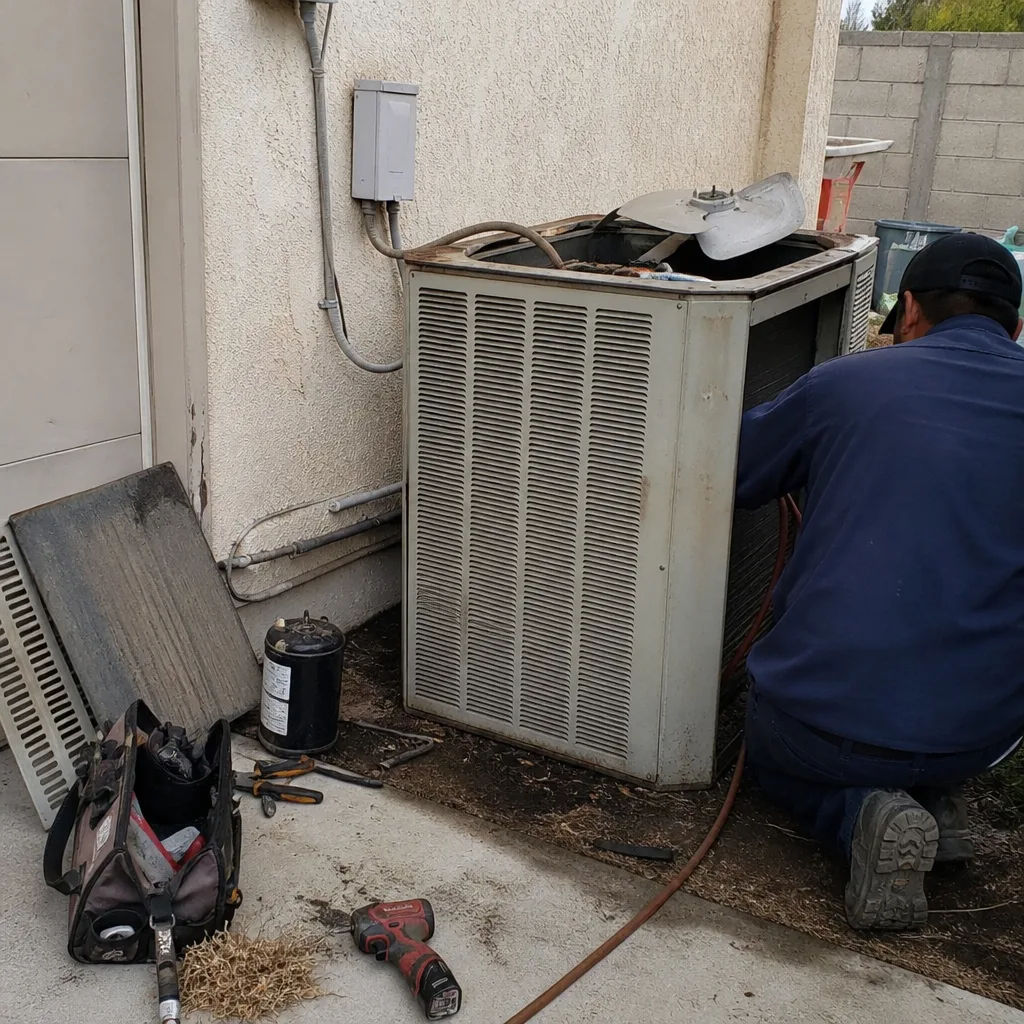 Before
 After
 Before
 After
 Before
 After